Winter Triangle
The Winter Triangle is an asterism, a star pattern that is not one of the 88 official constellations, made of three stars in Canis Major, Canis Minor and Orion. Its brightest star is Sirius (magnitude −1.46), and it is best seen in the evening in February.
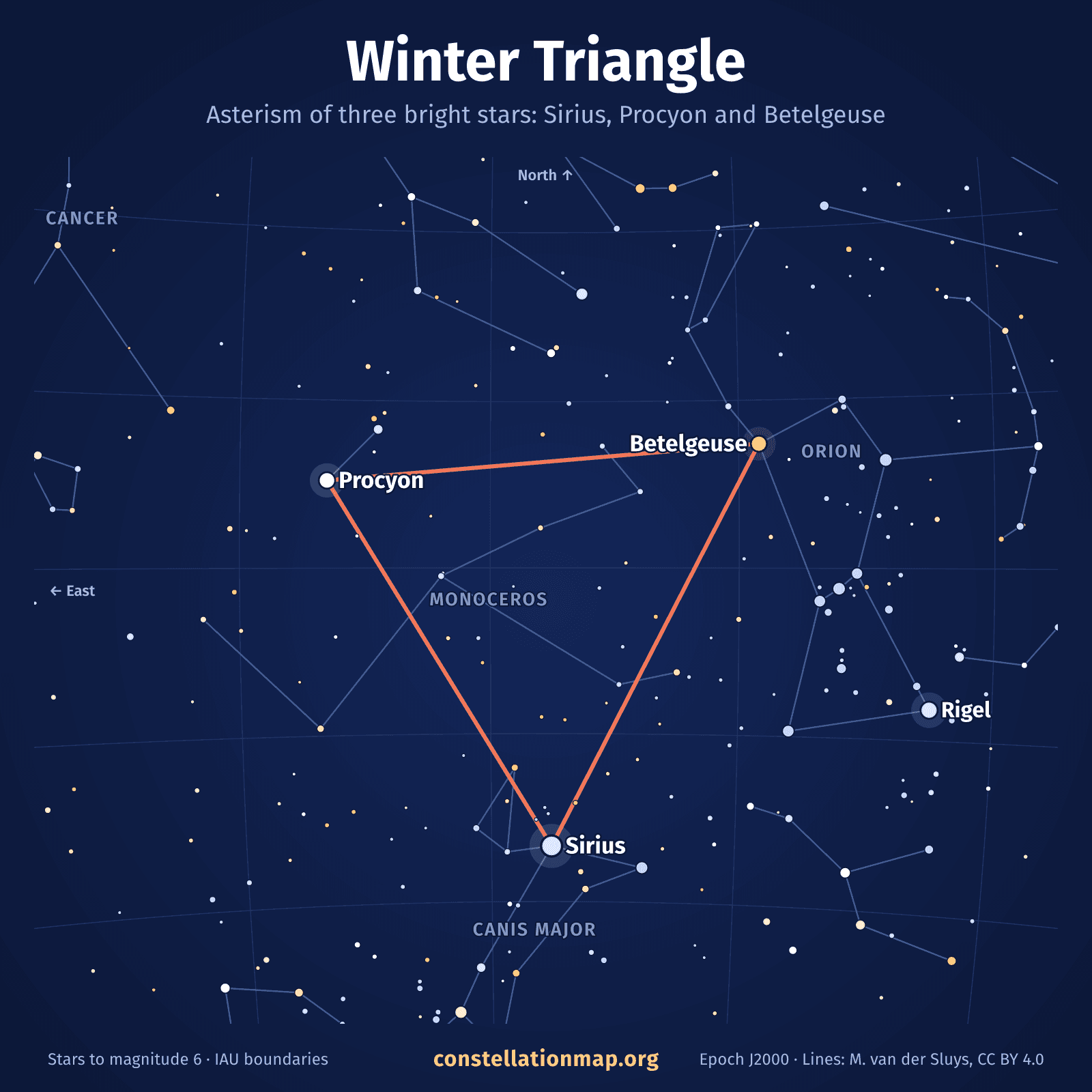
Free to use with credit: Atlas of the Sky (constellationmap.org), CC BY 4.0 · More
Embed this image on your website
How to use it
The three corners are three of the brightest stars of the winter sky: red Betelgeuse in Orion, Sirius in Canis Major and Procyon in Canis Minor.
How to find the Winter Triangle
From 40° N (the USA, southern Europe, Japan) it is highest in the south, about 49° above the horizon, in February evenings. From 35° S (Australia, South Africa, Argentina) it reaches about 56° in the north.
Stars of the Winter Triangle
| Star | Designation | Magnitude | Distance | Constellation |
|---|---|---|---|---|
| Sirius | α Canis Majoris | −1.46 | 9 ly | Canis Major |
| Procyon | α Canis Minoris | 0.38 | 11 ly | Canis Minor |
| Betelgeuse | α Orionis | 0.5 | 548 ly | Orion |
Questions about the Winter Triangle
Is the Winter Triangle a constellation?
No. The Winter Triangle is an asterism: its stars belong to Canis Major, Canis Minor and Orion, three of the 88 constellations defined by the International Astronomical Union.
What is the brightest star of the Winter Triangle?
Sirius, with an apparent magnitude of −1.46, about 9 light-years away.
When can I see the Winter Triangle?
It is highest in the evening sky in February.
Other asterisms
 Big DipperUrsa Major
 Little DipperUrsa Minor
 Orion's BeltOrion
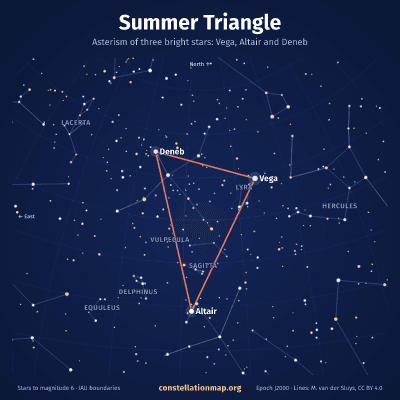 Summer TriangleLyra, Aquila and Cygnus
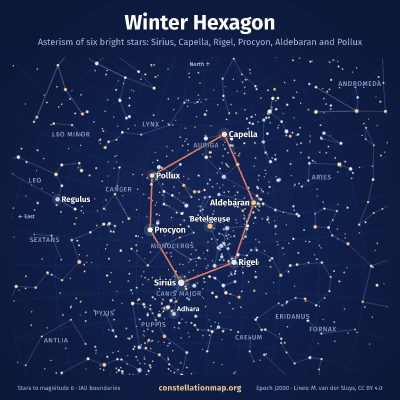 Winter HexagonCanis Major, Auriga, Orion, Canis Minor, Taurus and Gemini
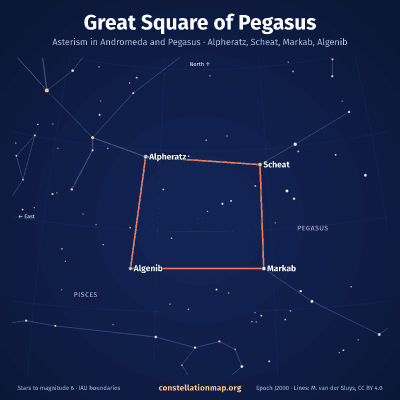 Great Square of PegasusAndromeda and Pegasus
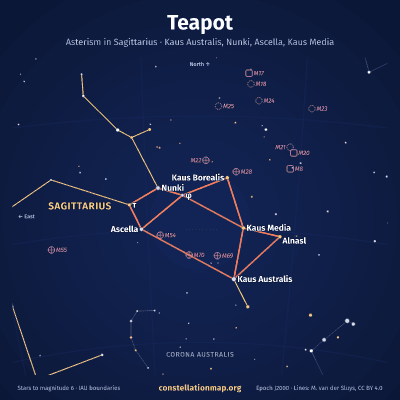 TeapotSagittarius
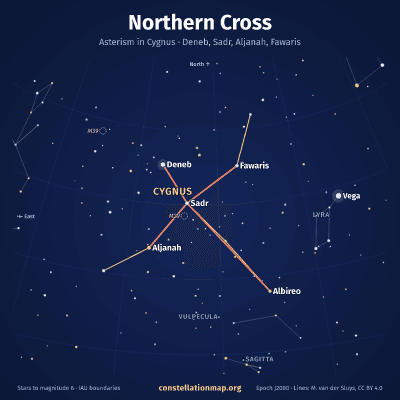 Northern CrossCygnus
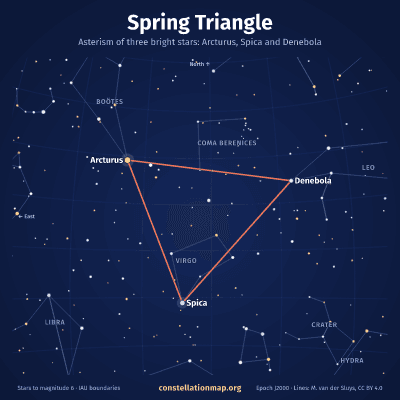 Spring TriangleBoötes, Virgo and Leo
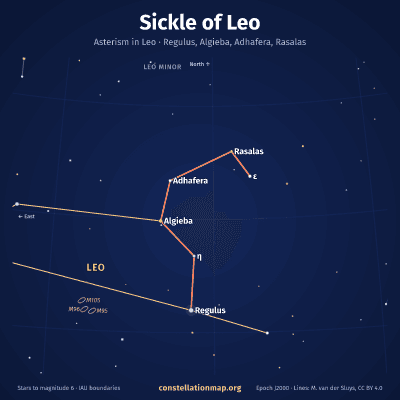 Sickle of LeoLeo
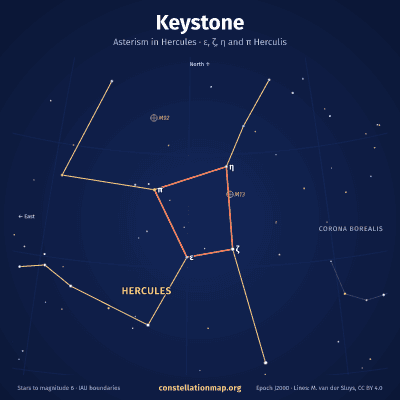 KeystoneHercules
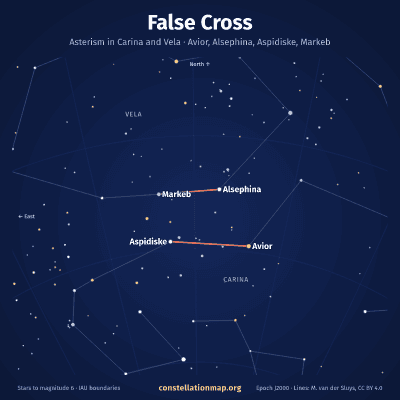 False CrossCarina and Vela
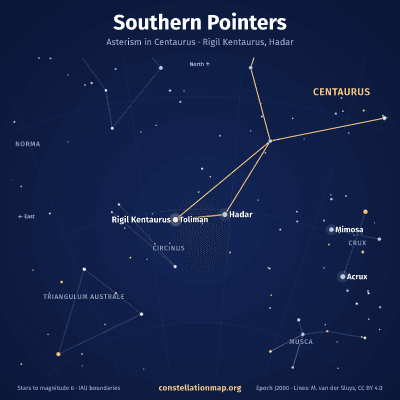 Southern PointersCentaurus