The Messier catalog
Charles Messier listed 110 nebulae, star clusters and galaxies between 1758 and 1781. They are the classic targets for binoculars and small telescopes.
Highlights
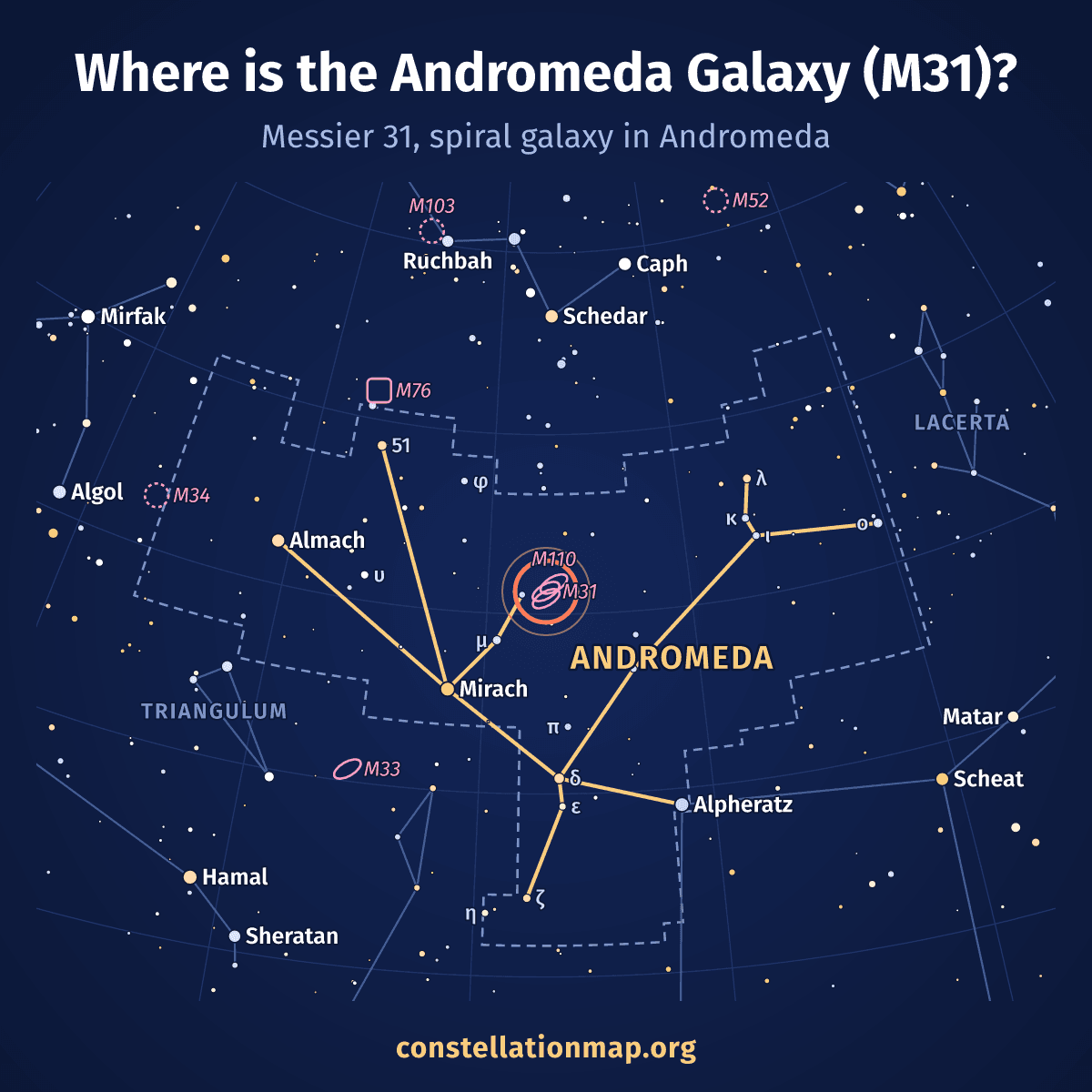 Andromeda Galaxy (M31)spiral galaxy · Andromeda
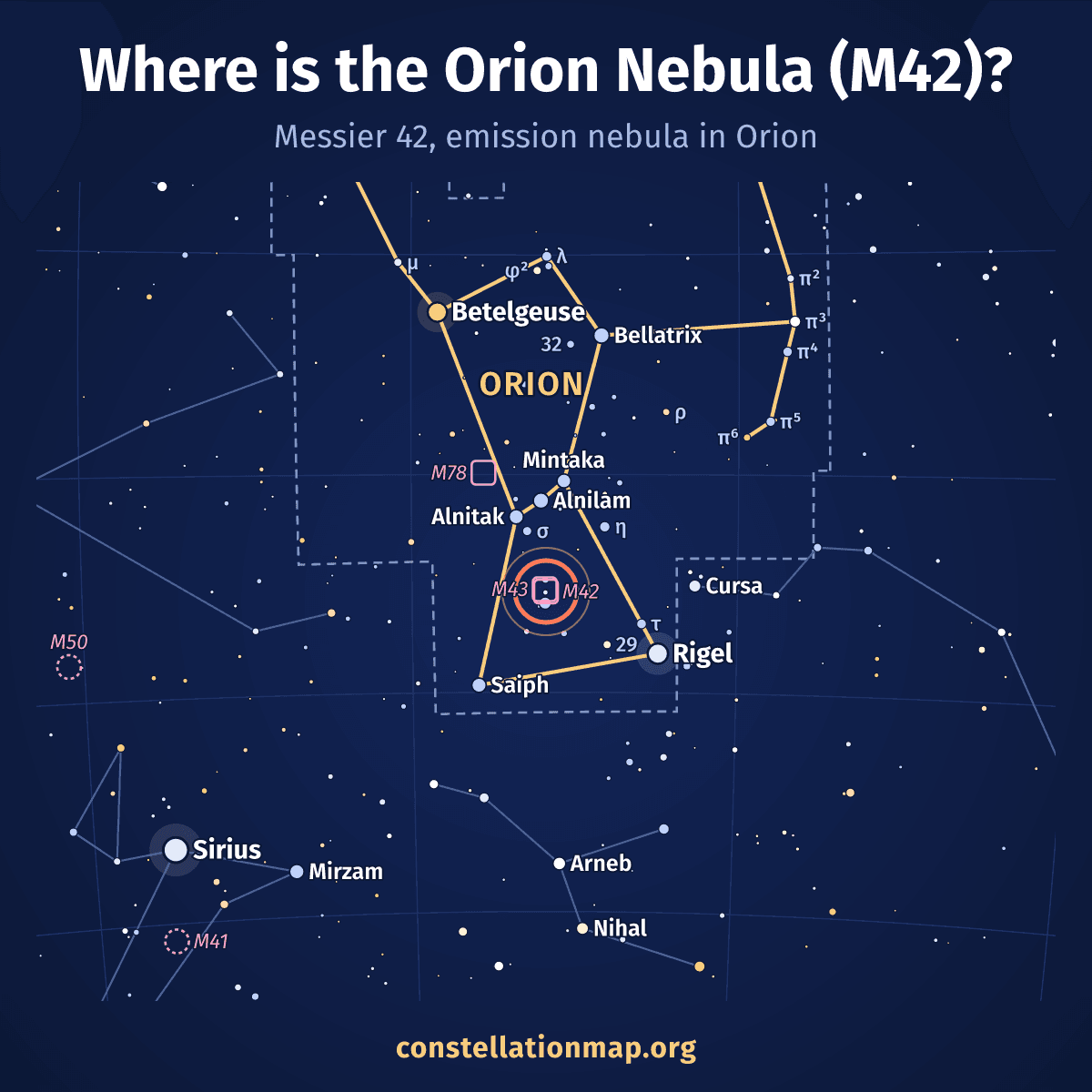 Orion Nebula (M42)emission nebula · Orion
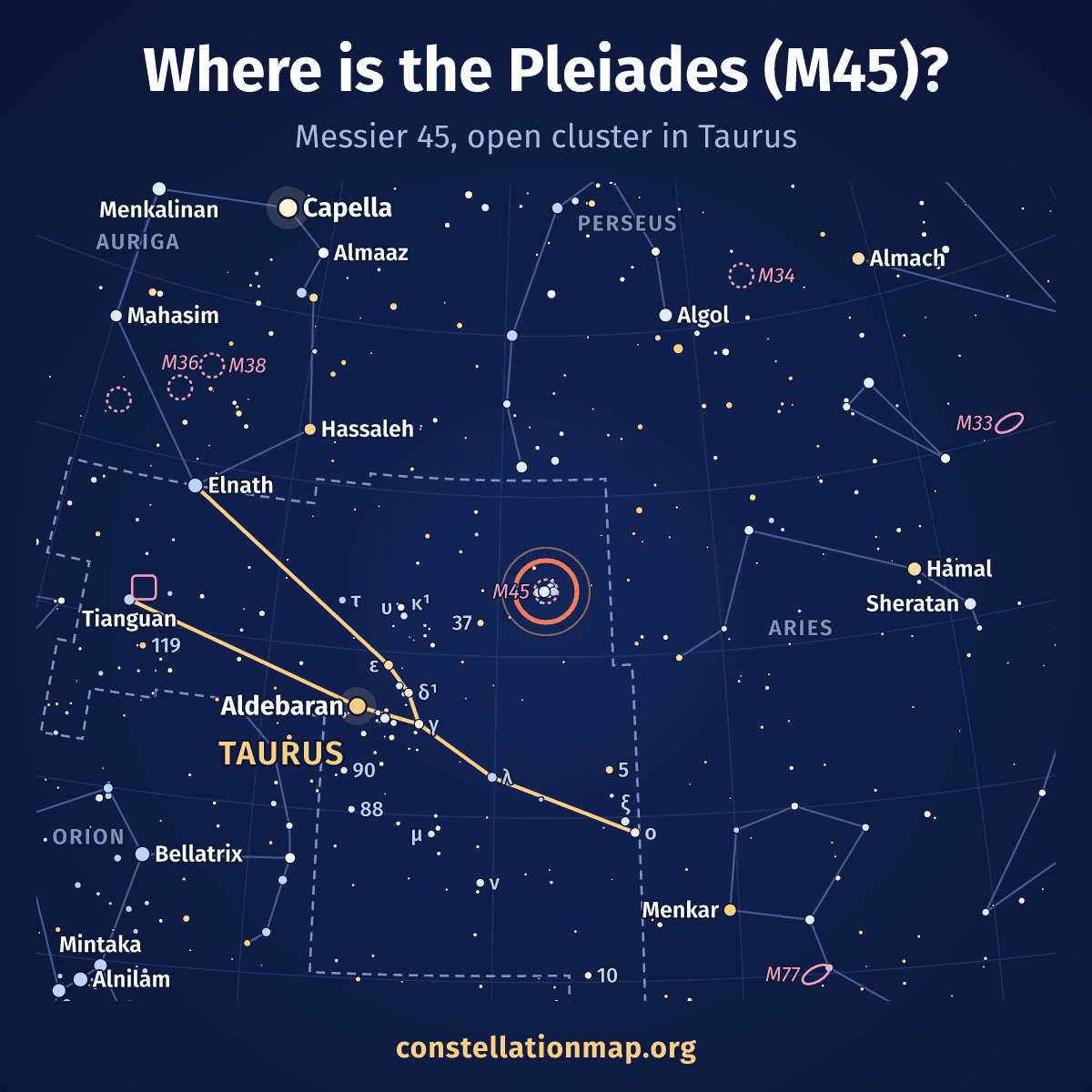 Pleiades (M45)open cluster · Taurus
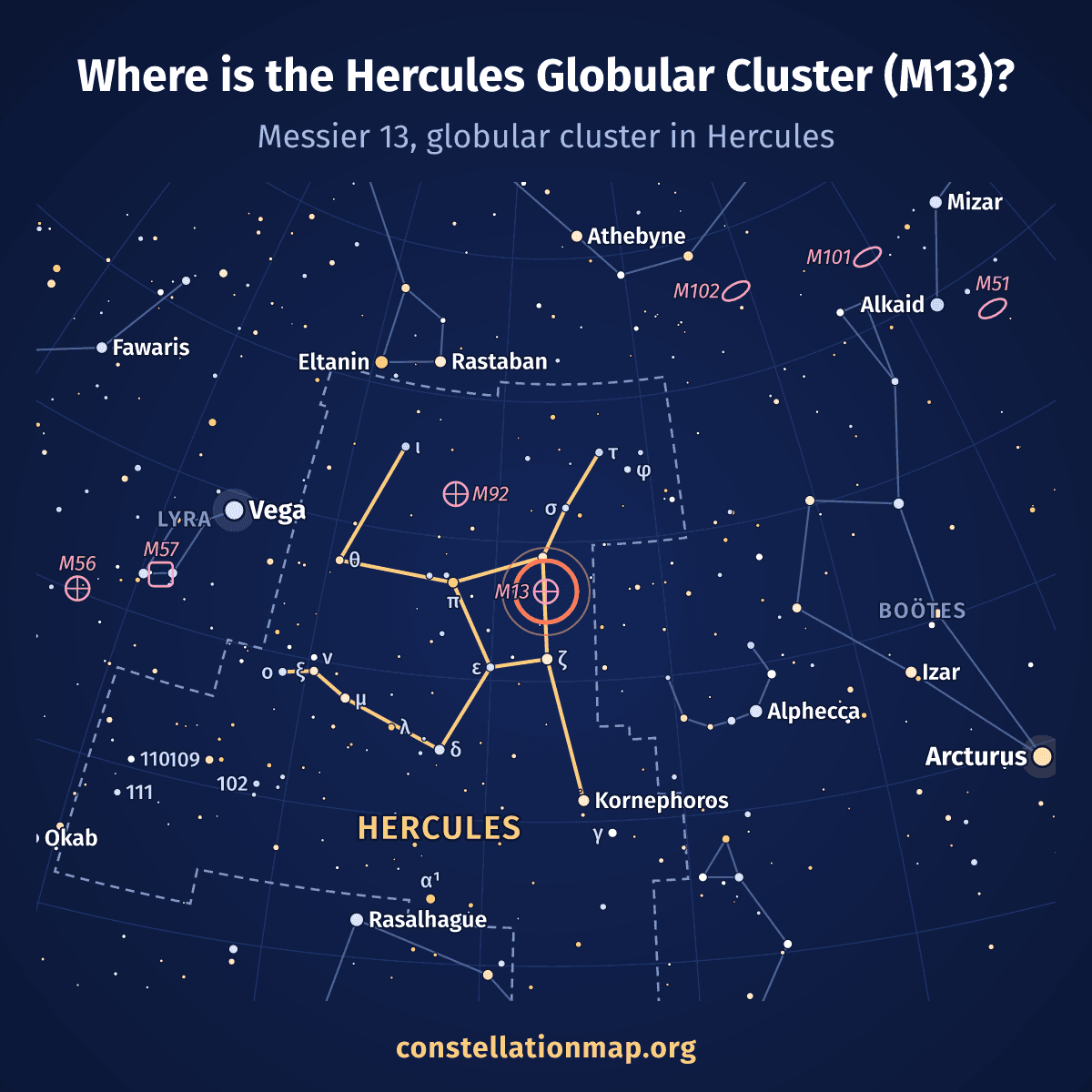 Hercules Globular Cluster (M13)globular cluster · Hercules
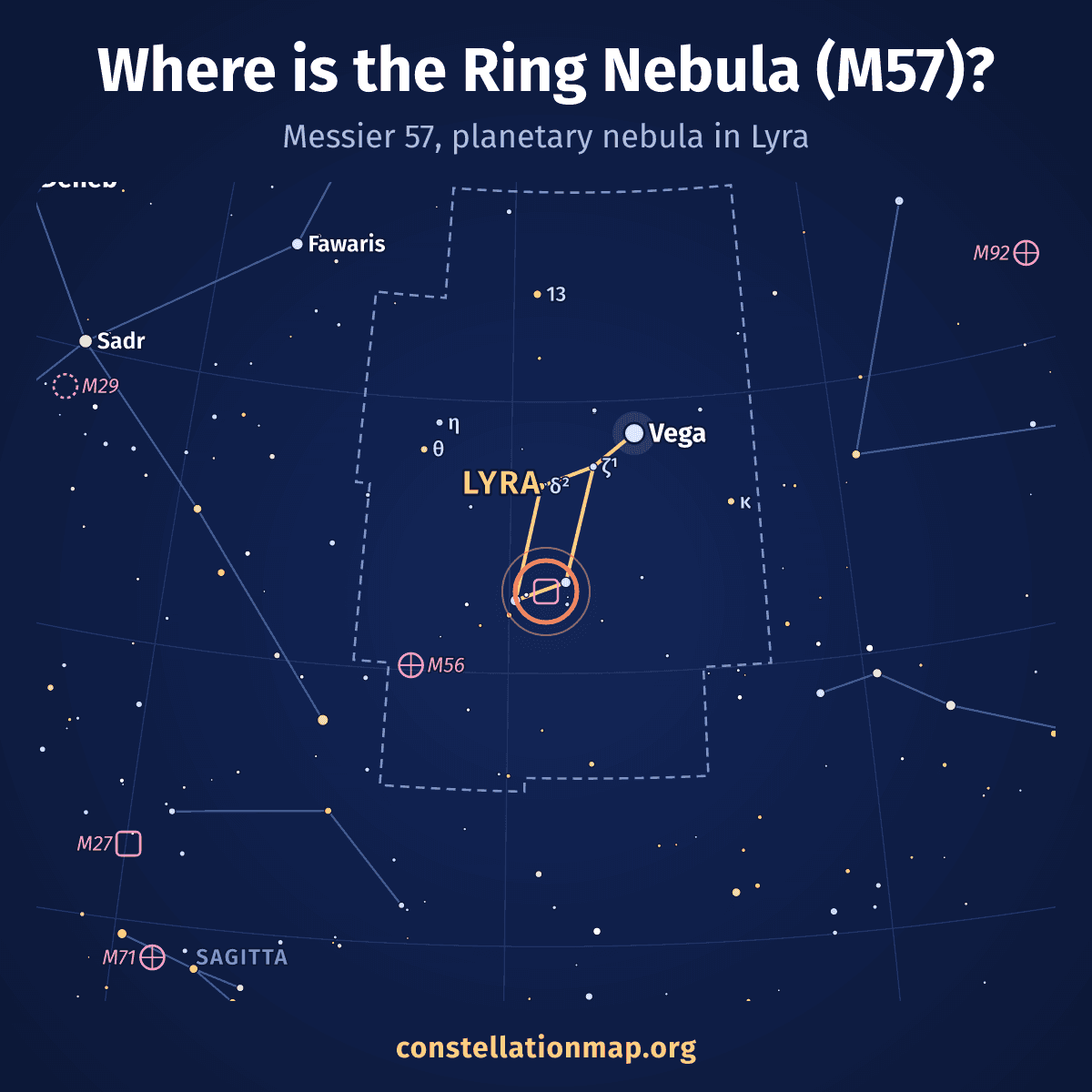 Ring Nebula (M57)planetary nebula · Lyra
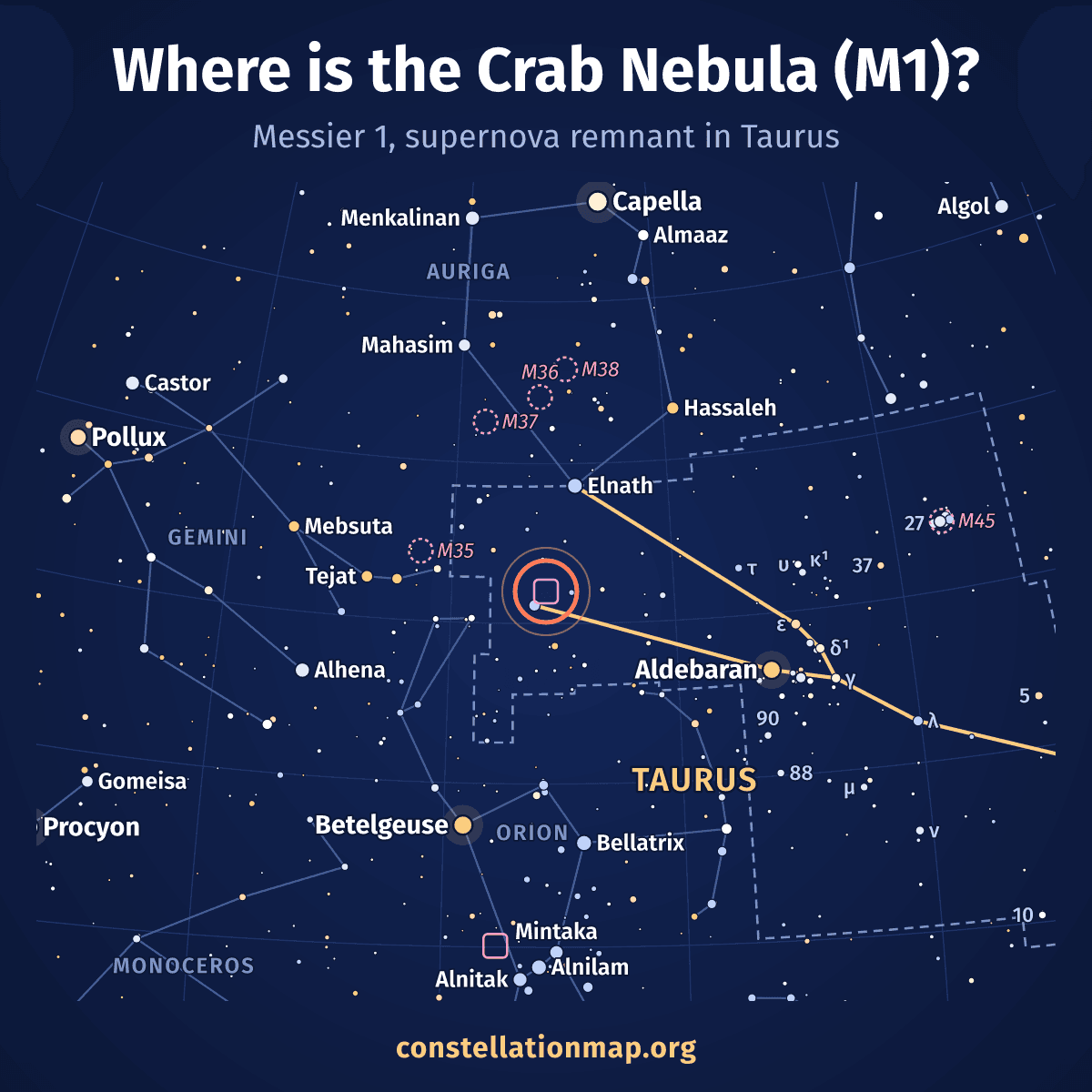 Crab Nebula (M1)supernova remnant · Taurus
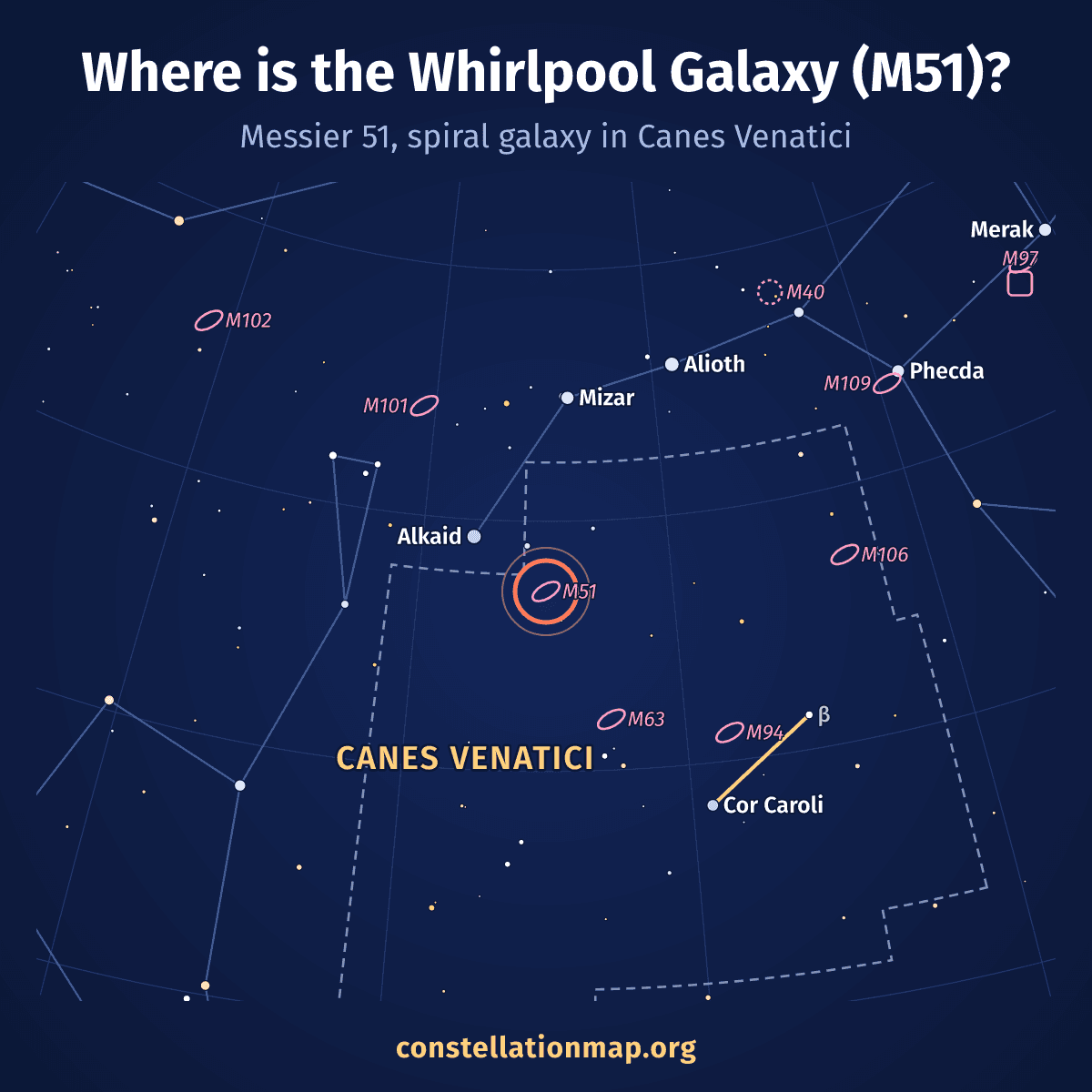 Whirlpool Galaxy (M51)spiral galaxy · Canes Venatici
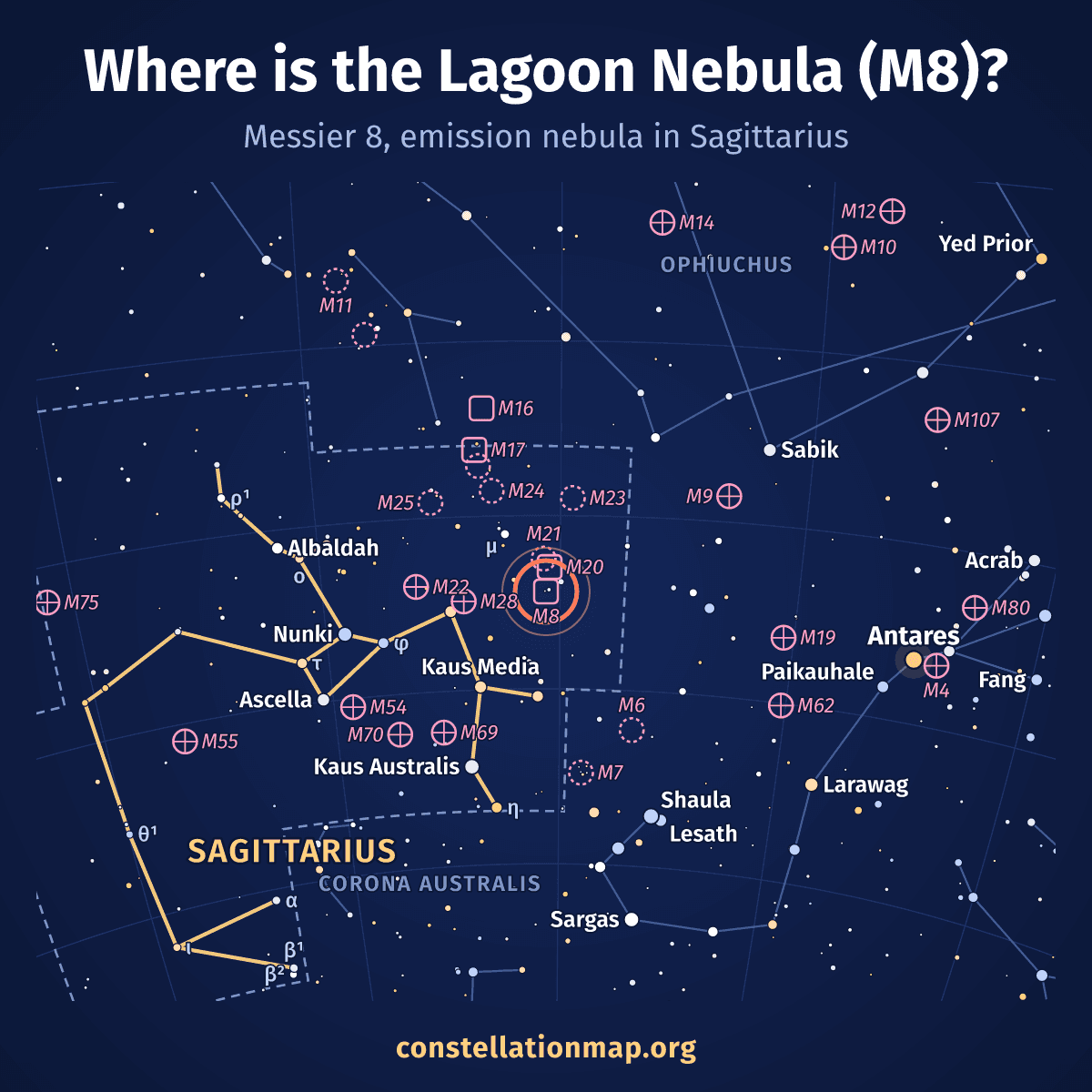 Lagoon Nebula (M8)emission nebula · Sagittarius
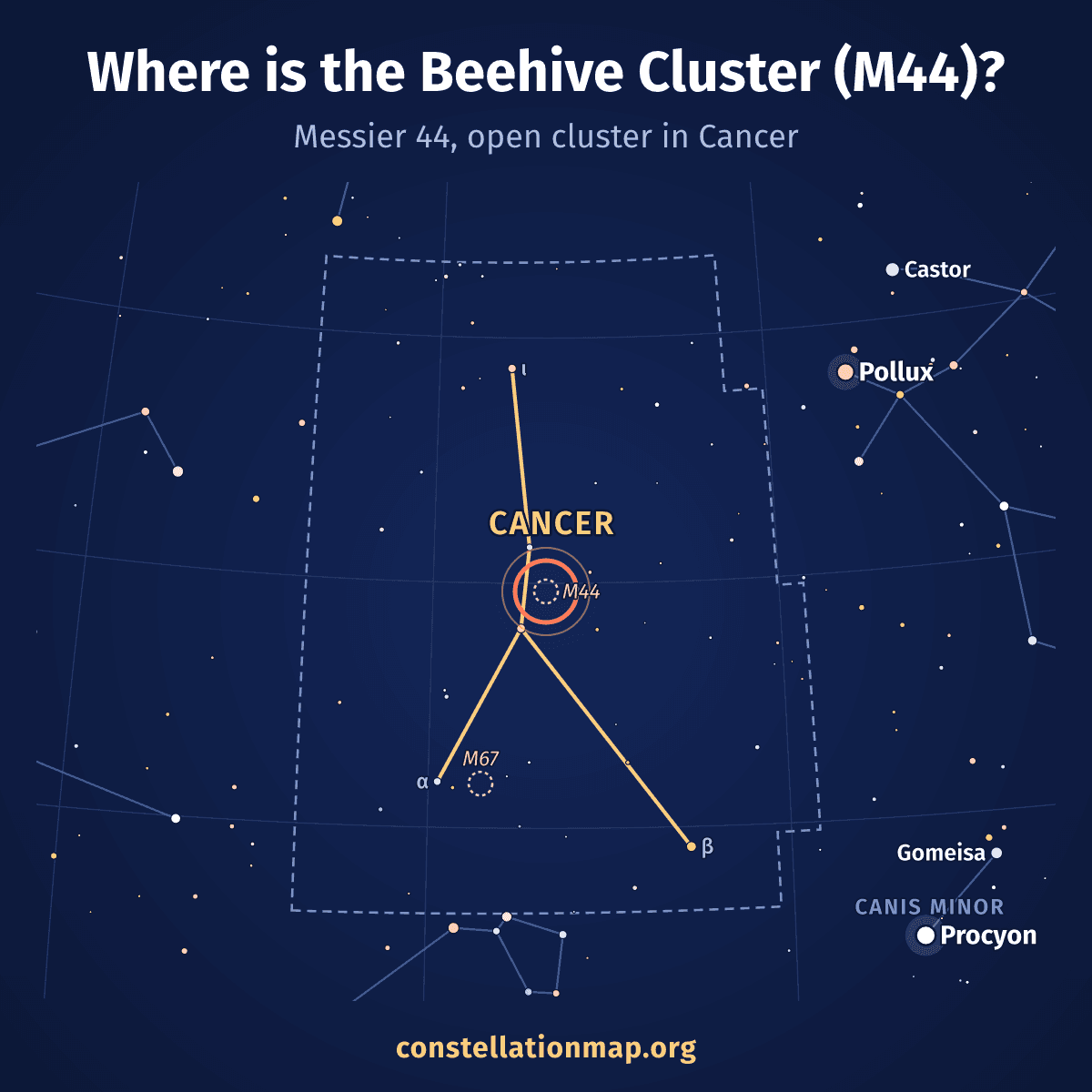 Beehive Cluster (M44)open cluster · Cancer
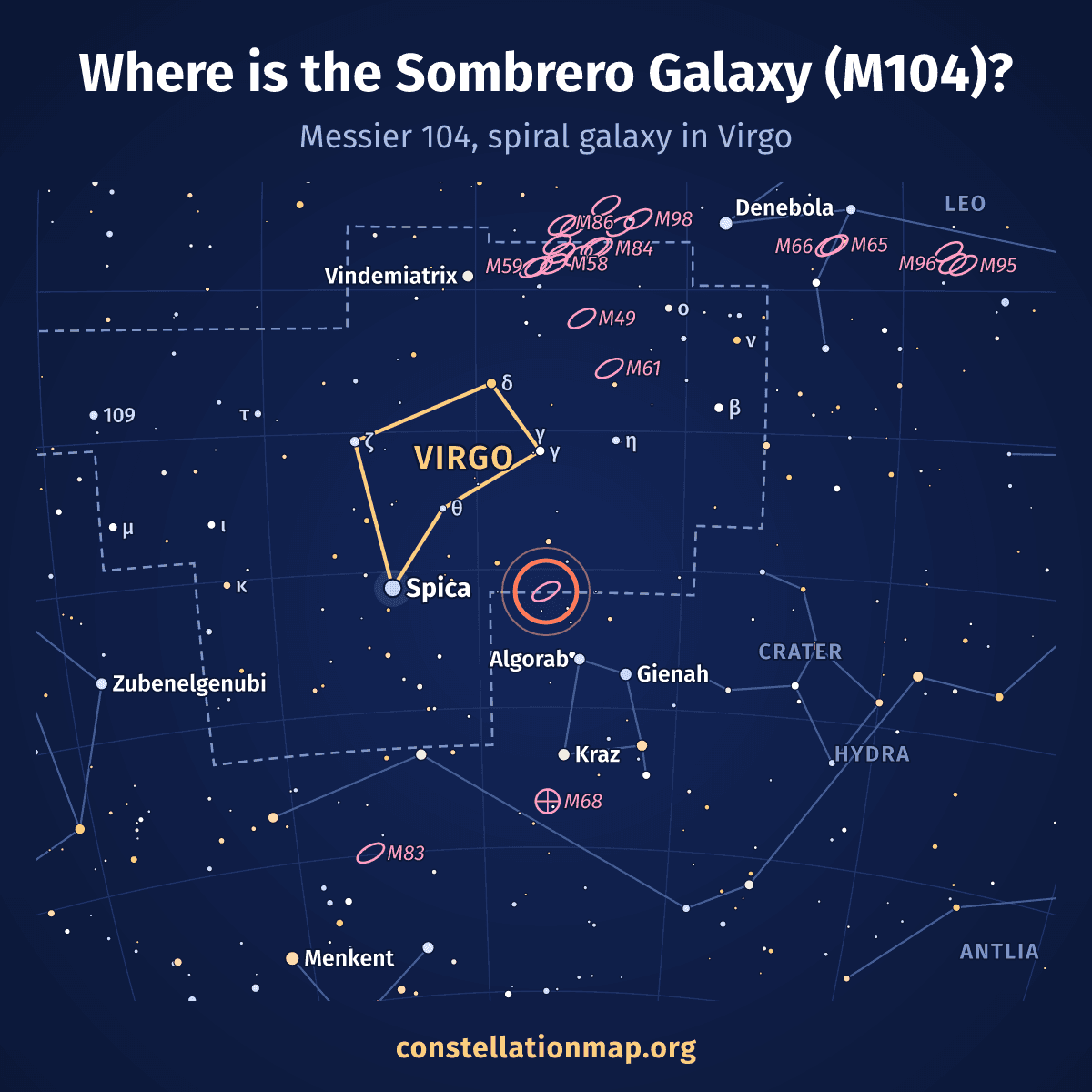 Sombrero Galaxy (M104)spiral galaxy · Virgo
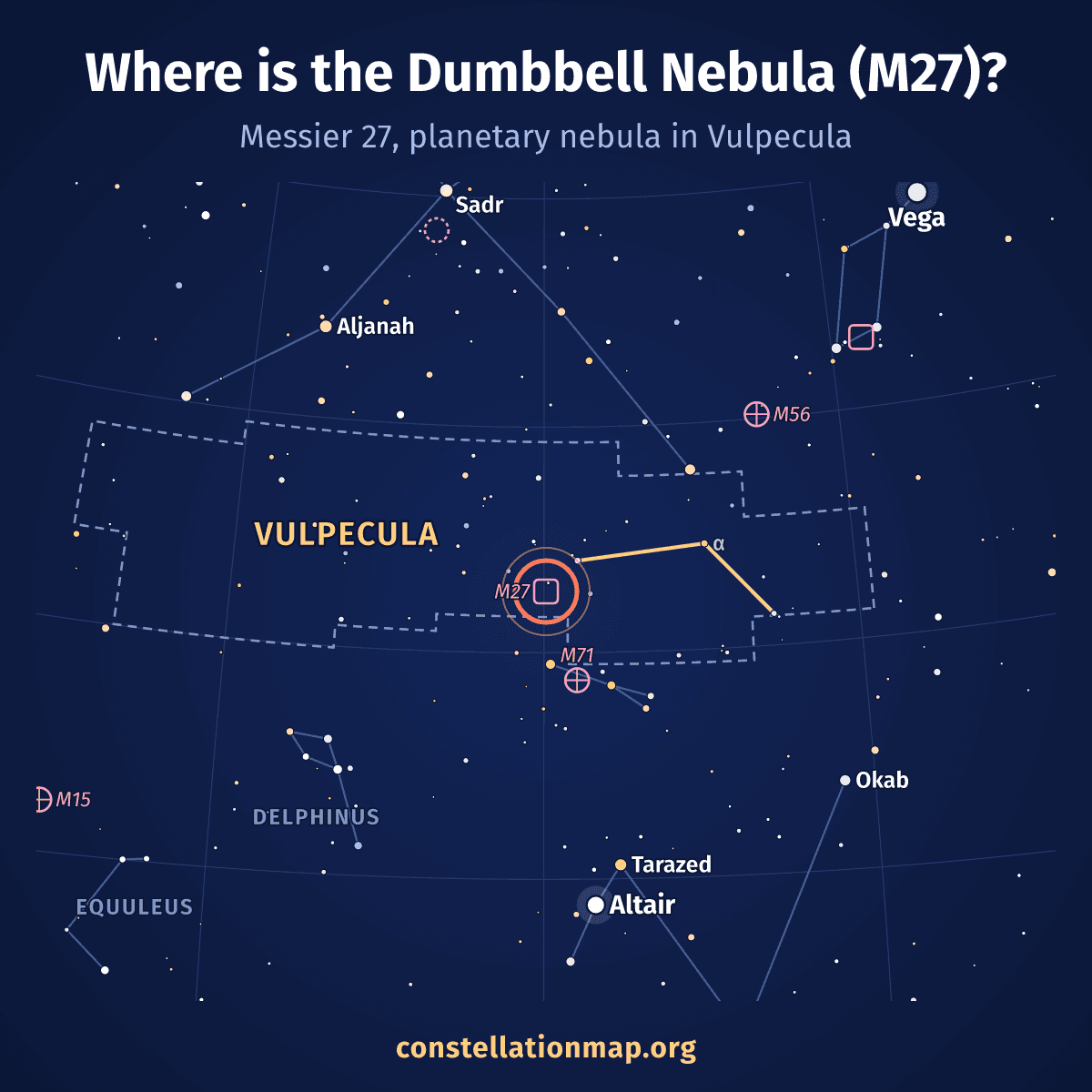 Dumbbell Nebula (M27)planetary nebula · Vulpecula
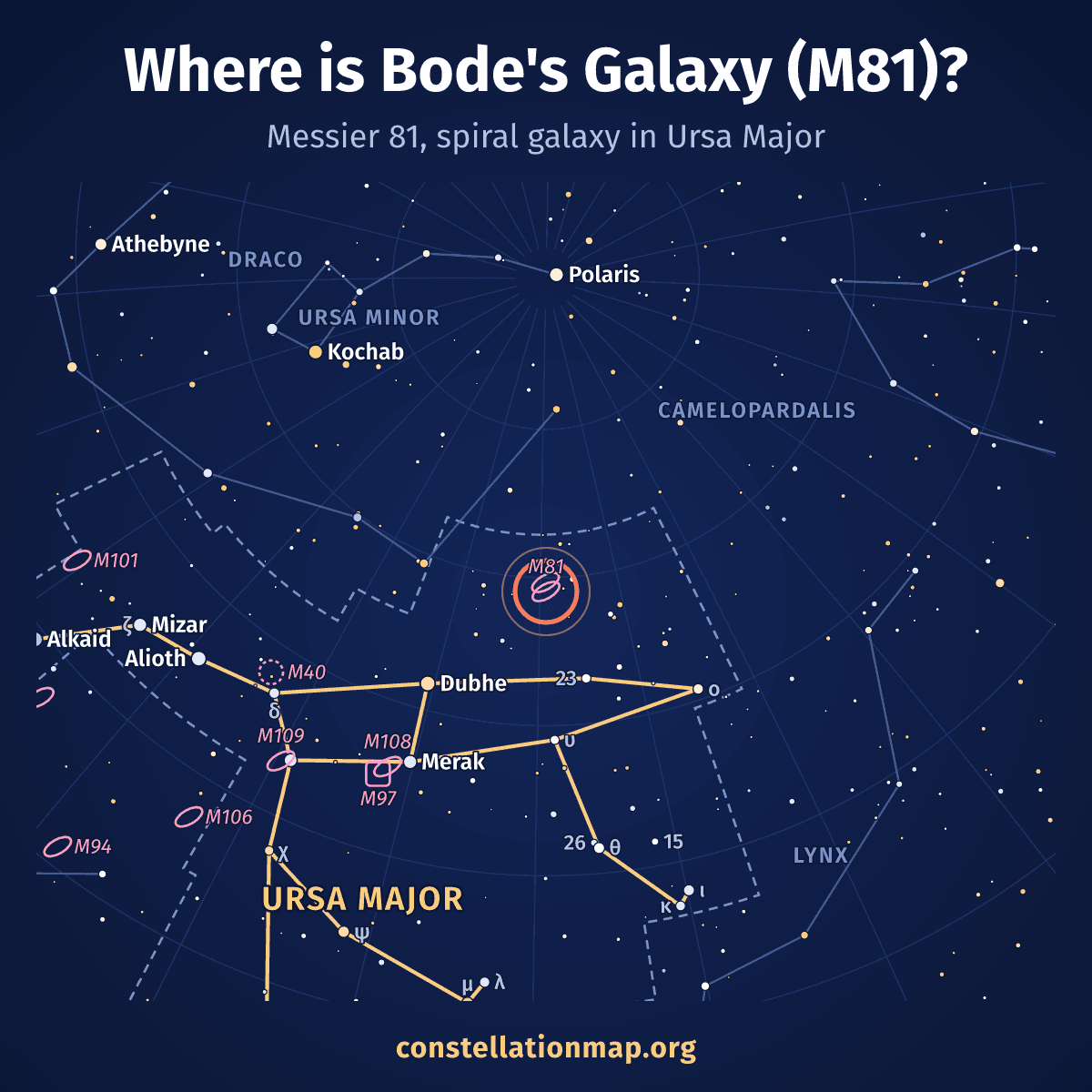 Bode's Galaxy (M81)spiral galaxy · Ursa Major
All 110 Messier objects
Frequently asked questions
How many Messier objects are there?
110: 40 galaxies, 12 nebulae and supernova remnants, 29 globular clusters, 27 open clusters and star clouds, 2 double stars and asterisms.
Which Messier object is the brightest?
Pleiades (M45) (magnitude 1.6), followed by Beehive Cluster (M44), Andromeda Galaxy (M31) and Ptolemy Cluster (M7).
Can I see Messier objects without a telescope?
About a dozen are visible to the naked eye under a dark sky, among them Andromeda Galaxy (M31), Orion Nebula (M42), Beehive Cluster (M44) and Hercules Globular Cluster (M13). Binoculars show most of the catalog.