Serpens constellation
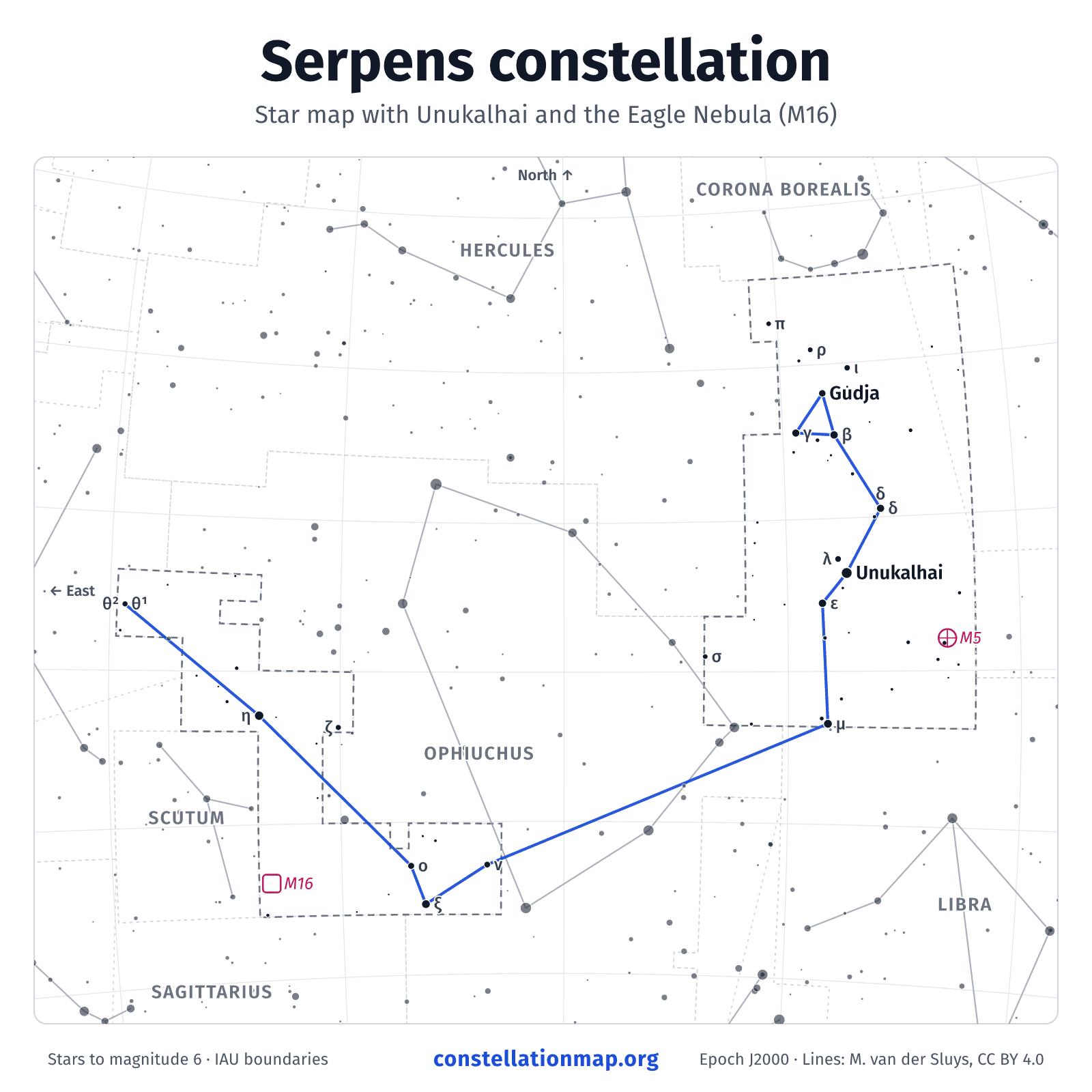
Serpens (the Serpent) is a constellation on the celestial equator, best seen in the evening in July. Its brightest star is Unukalhai (magnitude 2.65). Serpens covers 637 square degrees and is the 23rd-largest of the 88 constellations.
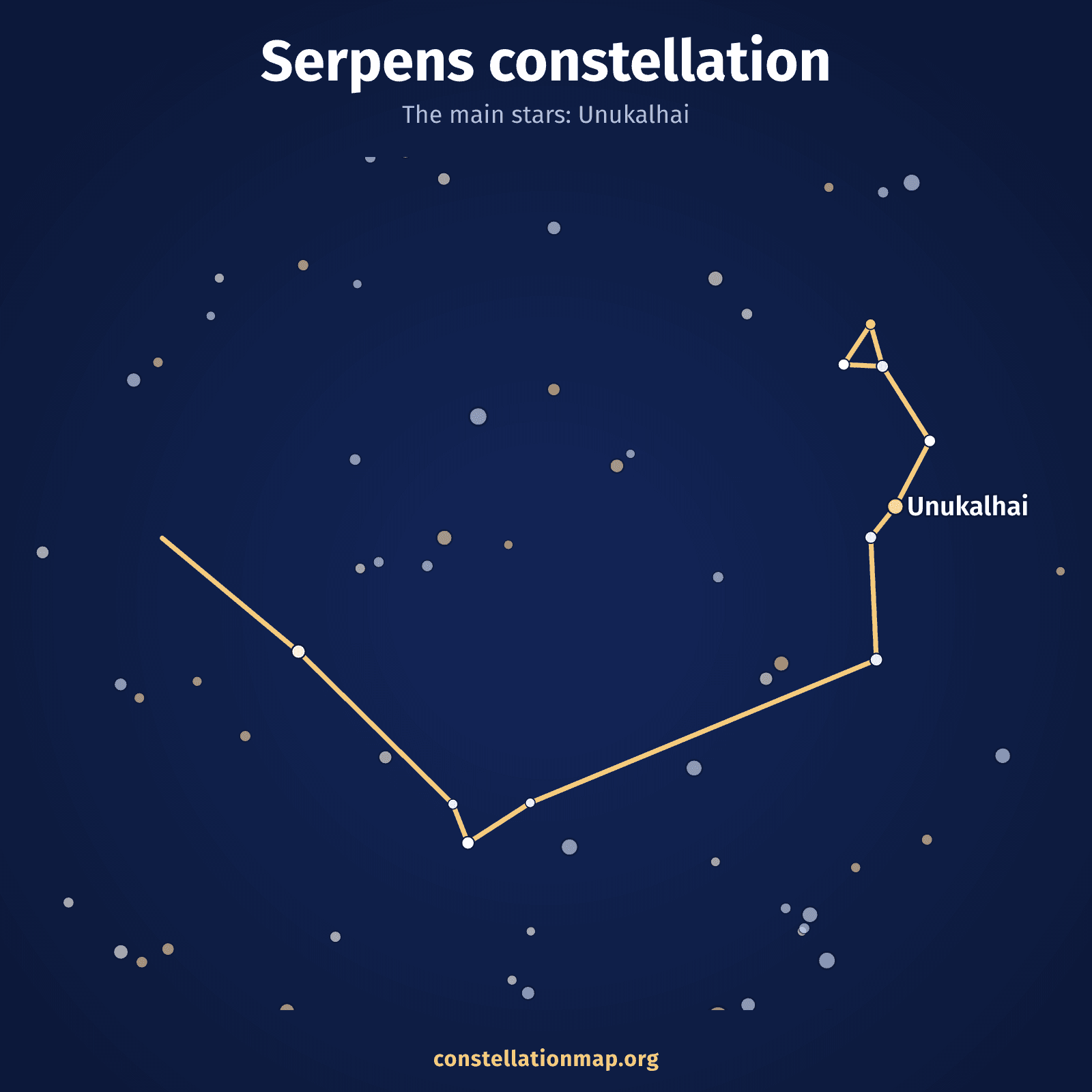
Free to use with credit: Atlas of the Sky (constellationmap.org), CC BY 4.0 · More
Embed this image on your website
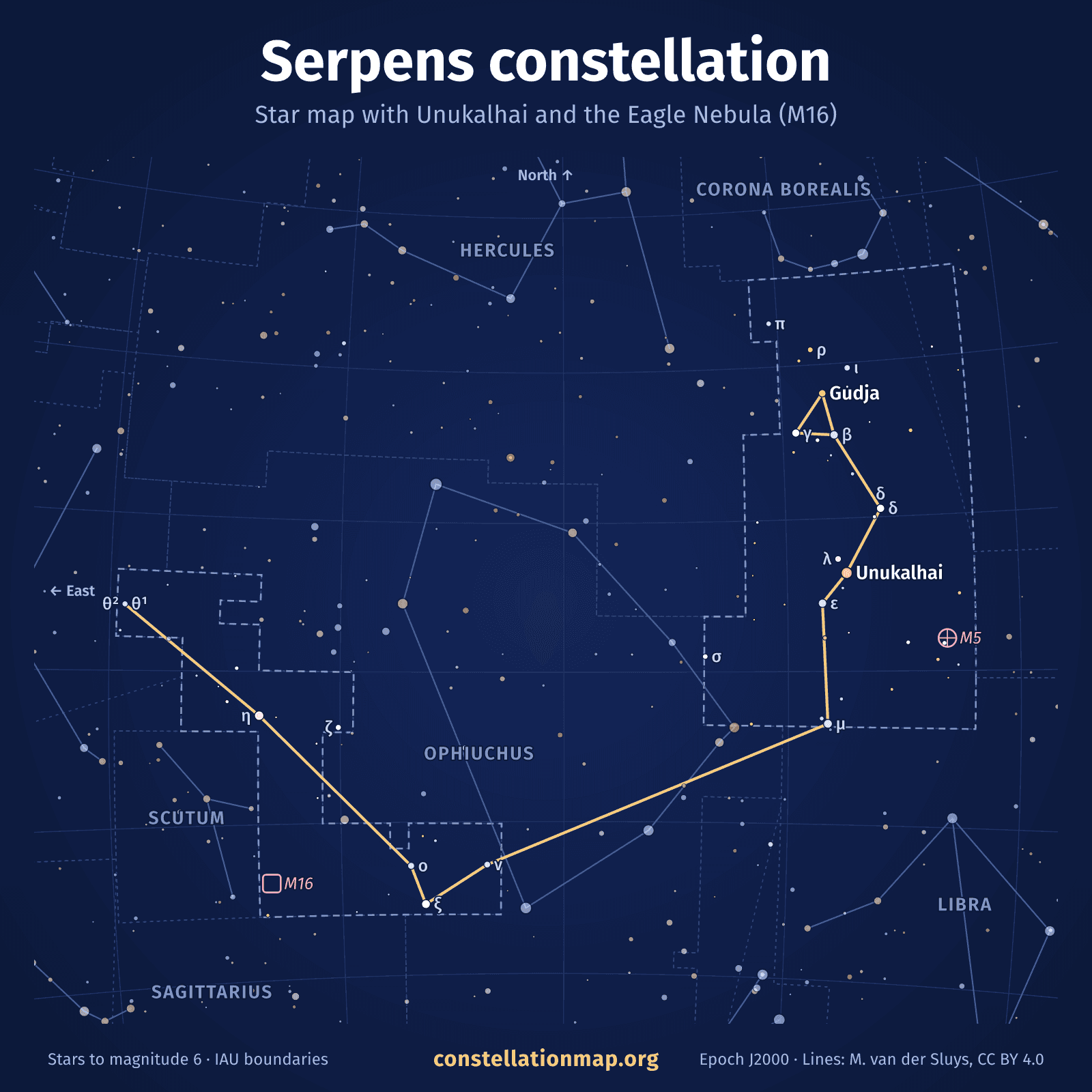
Detailed star map of Serpens
Facts
| Latin name | Serpens (genitive: Serpentis) |
|---|---|
| Abbreviation | Ser |
| Meaning | the Serpent |
| Area | 637 square degrees (23rd of 88) |
| Location | right ascension 17.1 h, declination +2° |
| Visible from | latitudes 74° N to 64° S (whole constellation) |
| Best month | July (at about 9 pm) |
| Brightest star | Unukalhai |
| Stars brighter than magnitude 6 | 66 |
| Named stars (IAU) | 3 |
| Messier objects | M5, M16 |
| Neighbors | Aquila, Boötes, Corona Borealis, Hercules, Libra, Ophiuchus, Scutum, Sagittarius, Virgo |
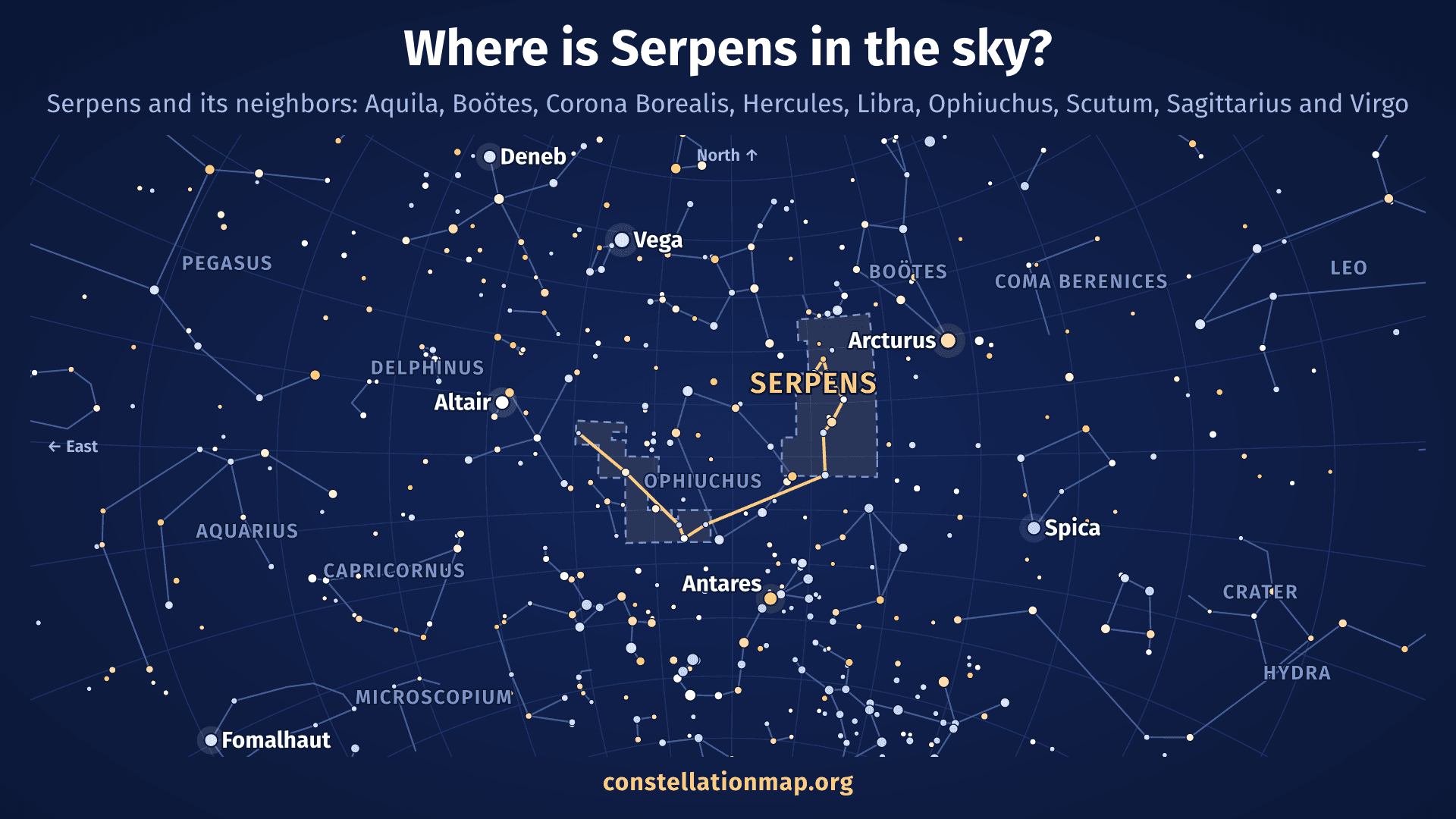
How to find Serpens
From 40° N (the USA, southern Europe, Japan) look south in July evenings: at about 9 pm Serpens stands highest, around 52° above the southern horizon. From 35° S (Australia, South Africa, Argentina) it is highest in the north, about 53° above the horizon. The months before and after (June and August) are also good: then it is up a couple of hours earlier or later.
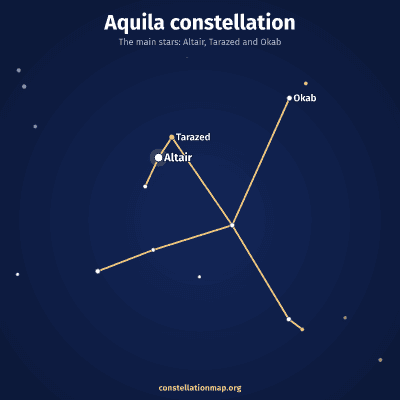
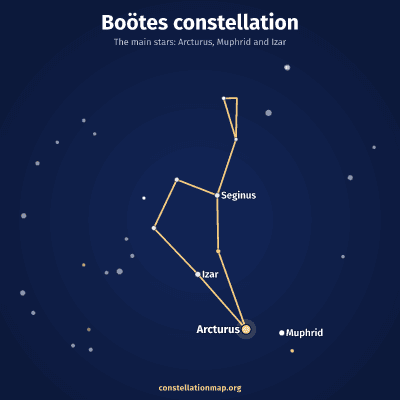
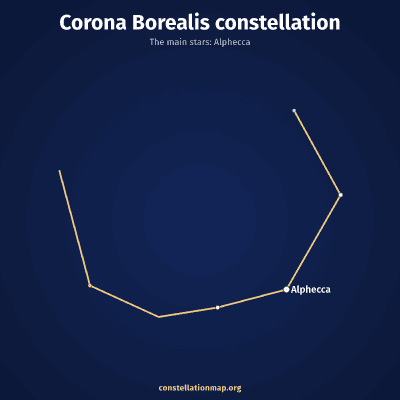
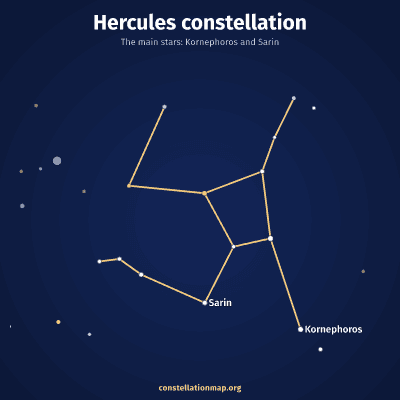
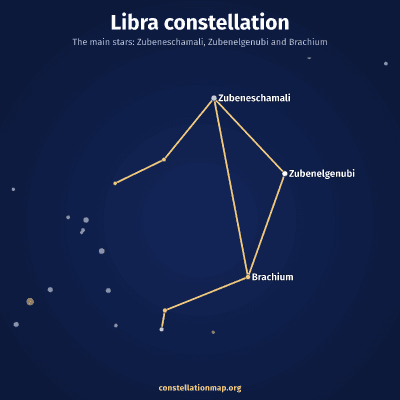
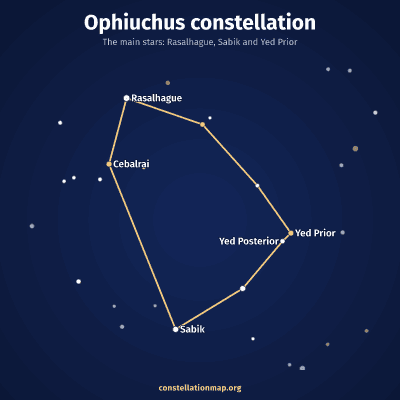
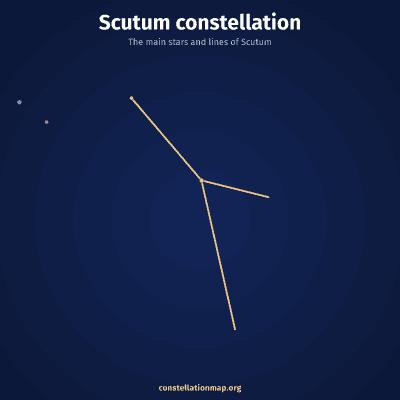
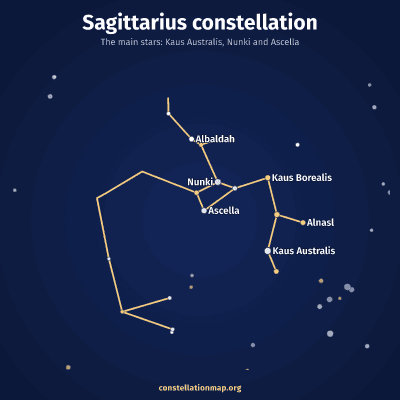
Serpens borders Aquila, Boötes, Corona Borealis, Hercules, Libra, Ophiuchus, Scutum, Sagittarius and Virgo.
Stars of Serpens
Serpens has 66 stars brighter than magnitude 6, the limit of the naked eye under a dark sky. These are the brightest:
| Star | Designation | Magnitude | Type | Distance |
|---|---|---|---|---|
| Unukalhai | α Serpentis | 2.65 | K2IIIbCN1 | 83 ly |
| — | η Serpentis | 3.26 | K0III-IV | — |
| — | μ Serpentis | 3.53 | A0V | — |
| — | ξ Serpentis | 3.54 | F0IVDel Sct | — |
| — | β Serpentis | 3.67 | A2IV | — |
| — | ε Serpentis | 3.71 | A2Vm | — |
| — | δ Serpentis | 3.8 | F0IV | — |
| — | δ Serpentis | 3.8 | F0IV | — |
| — | γ Serpentis | 3.85 | F6V | — |
| Gudja | κ Serpentis | 4.09 | M0.5IIIab | 329 ly |
| — | ο Serpentis | 4.26 | A2V | — |
| — | ν Serpentis | 4.33 | A2V | — |
Deep-sky objects in Serpens
Serpens contains 2 objects from Charles Messier's catalog:
- Messier 5 (M5): globular cluster, 6.0 mag
- Eagle Nebula (M16): emission nebula, 6.0 mag
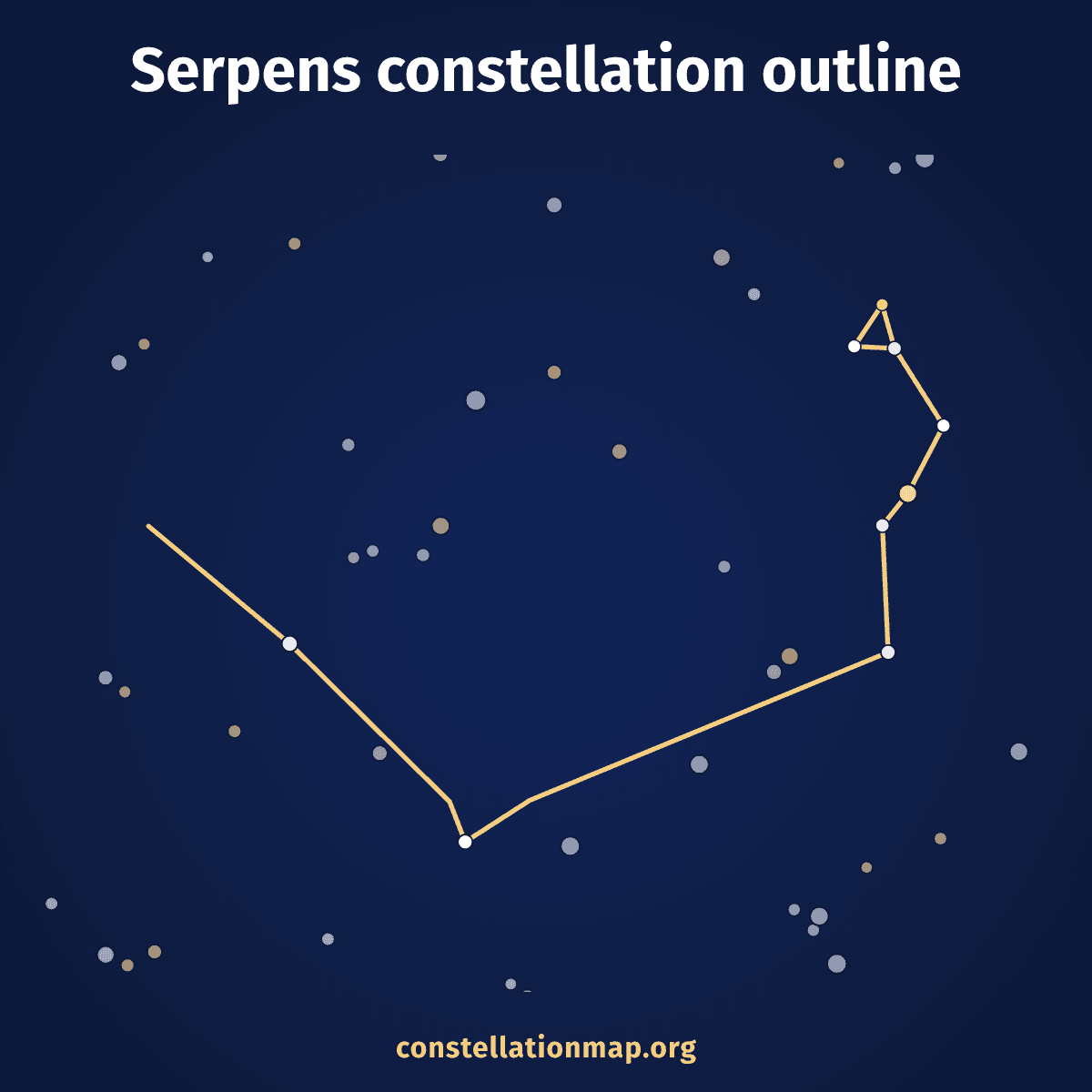
Printable Serpens map and outline
A black and white version for printing and a plain outline of the Serpens figure, useful for school projects, worksheets and learning to recognize the shape.
History
Serpens is one of the 48 constellations listed by Ptolemy in the Almagest (2nd century AD). Its official boundary was drawn by Eugène Delporte for the International Astronomical Union in 1930.
Questions about Serpens
What is the brightest star in Serpens?
Unukalhai, at magnitude 2.65, about 83 light-years away.
When can you see Serpens?
Serpens is best seen in the evening in July. The whole constellation is visible from latitudes between 74° N and 64° S.
How many stars are in Serpens?
66 stars in Serpens are brighter than magnitude 6 and can be seen with the naked eye under a dark sky; 3 of them have official IAU names.
What does Serpens mean?
Serpens means “the Serpent” in Latin. Its abbreviation is Ser and the genitive, used in star names such as α Serpentis, is Serpentis.